
EVERYDAY LIFE
Hard Water, Soft Water: Why It Makes All the Difference When Cleaning
Your tap water affects the performance of your detergent more than you might think.
By the SIC R&D Team · 5 min read · Published on 1 August 2026
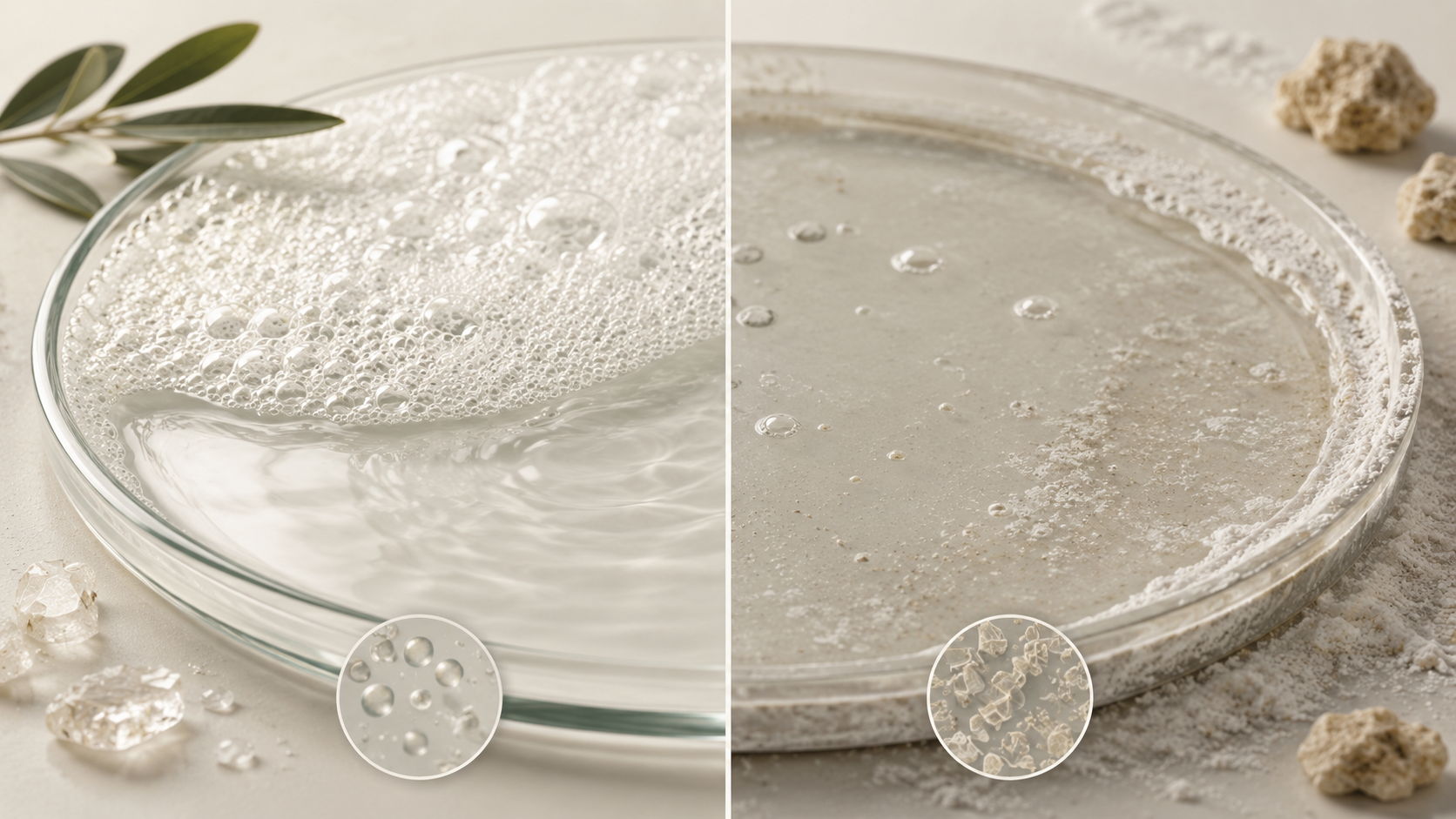
In Tunisia, as elsewhere, water quality varies from one region to another. Some areas have “hard” water, while others have “soft” water. Although this difference is invisible to the eye, it directly affects cleaning performance.
Hard water contains high levels of minerals, mainly calcium and magnesium—the compounds responsible for limescale. Soft water contains much lower levels.
These minerals react with soap. Instead of lathering and cleaning effectively, some of the soap binds to the minerals and forms an insoluble deposit: the whitish film that can appear on dishes, laundry and surfaces.

MORE PRODUCT
A larger quantity is required to achieve the same result.

LESS LATHER
Limescale binds with some of the active soap.

WHITE DEPOSITS
A chalky film builds up on laundry and household appliances.
This is why modern detergents contain “sequestering agents”, which bind the minerals responsible for water hardness and allow the soap to work effectively.
At SIC, we develop our formulas with local conditions in mind, including the water hardness found across our regions. A good product should not only perform well in the laboratory—it must also work effectively in a real kitchen, with real tap water.