
FORMULATION
Surfactants: The Molecules That Do All the Work
The true hero of your detergent is invisible.
By the SIC R&D Team · 4 min read · Published on 1 August 2026
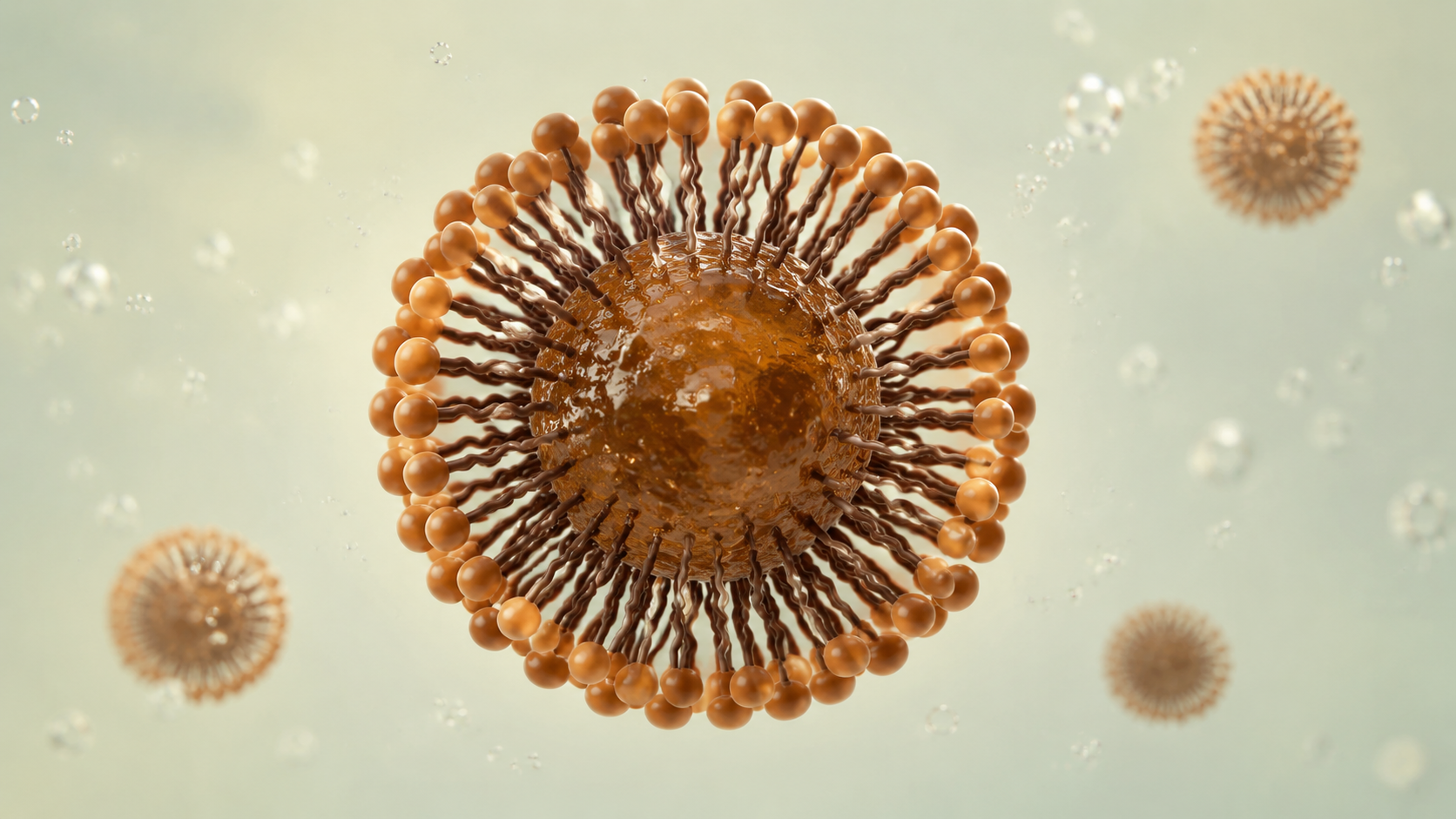
When you wash clothes or dishes, all you see is water and foam. Yet the real work is carried out by tiny molecules that are rarely discussed: surfactants.
A surfactant is based on a simple yet ingenious principle. It has two opposing parts: a hydrophilic head, which is attracted to water, and a hydrophobic tail, which repels water but is attracted to grease.
In the wash water, surfactants arrange themselves around greasy dirt: their tails penetrate the grease, while their heads remain directed towards the water. The dirt becomes trapped inside tiny structures called micelles, which lift it from the surface and carry it away during rinsing.

HYDROPHILIC HEAD
The end that is attracted to water and helps the dirt rinse away.

HYDROPHOBIC TAIL
The end that captures grease and oily substances.

THE MICELLE
The structure that traps dirt and carries it away.
It is this mechanism—not simply the act of wetting—that removes greasy stains which water alone cannot eliminate.
At SIC, selecting the right surfactants lies at the heart of our R&D process. We continuously seek the right balance: maximum effectiveness against dirt while remaining as gentle as possible on surfaces and the environment.